

Storage 3 min read
Glass or plastic for leftover storage?
In this guide

Choose a food-storage container for the route it will take through your kitchen. A large dish for serving dinner and a small box for tomorrow's portion solve different problems, even when both have lids.
Start with the next use
Decide whether the food will stay at home, travel to work, be divided for another meal or return to an approved reheating vessel. Choose the container around that next task rather than the amount left in the cooking pot. A large glass baking dish can occupy a substantial fridge shelf, while several smaller containers make individual portions easier to retrieve. Neither arrangement is automatically better. Match the footprint to the shelf and leave room to follow appropriate food-storage guidance instead of treating a convenient lid as the entire plan.
Compare the exact products, not broad labels
The Pyrex deep reference is glass bakeware with its own use directions; the Rubbermaid Brilliance reference is a plastic portion-storage format. Do not transfer one model's microwave, oven, freezer or washing permissions to another container just because the material category sounds familiar. Check lids and seals separately from the body. Keep the instructions with the product name so a replacement lid or an older box is not silently given the permissions of a newer purchase. Clear model information is more useful than assuming every piece in a matching color behaves alike.
Think about lifting and the available shelf
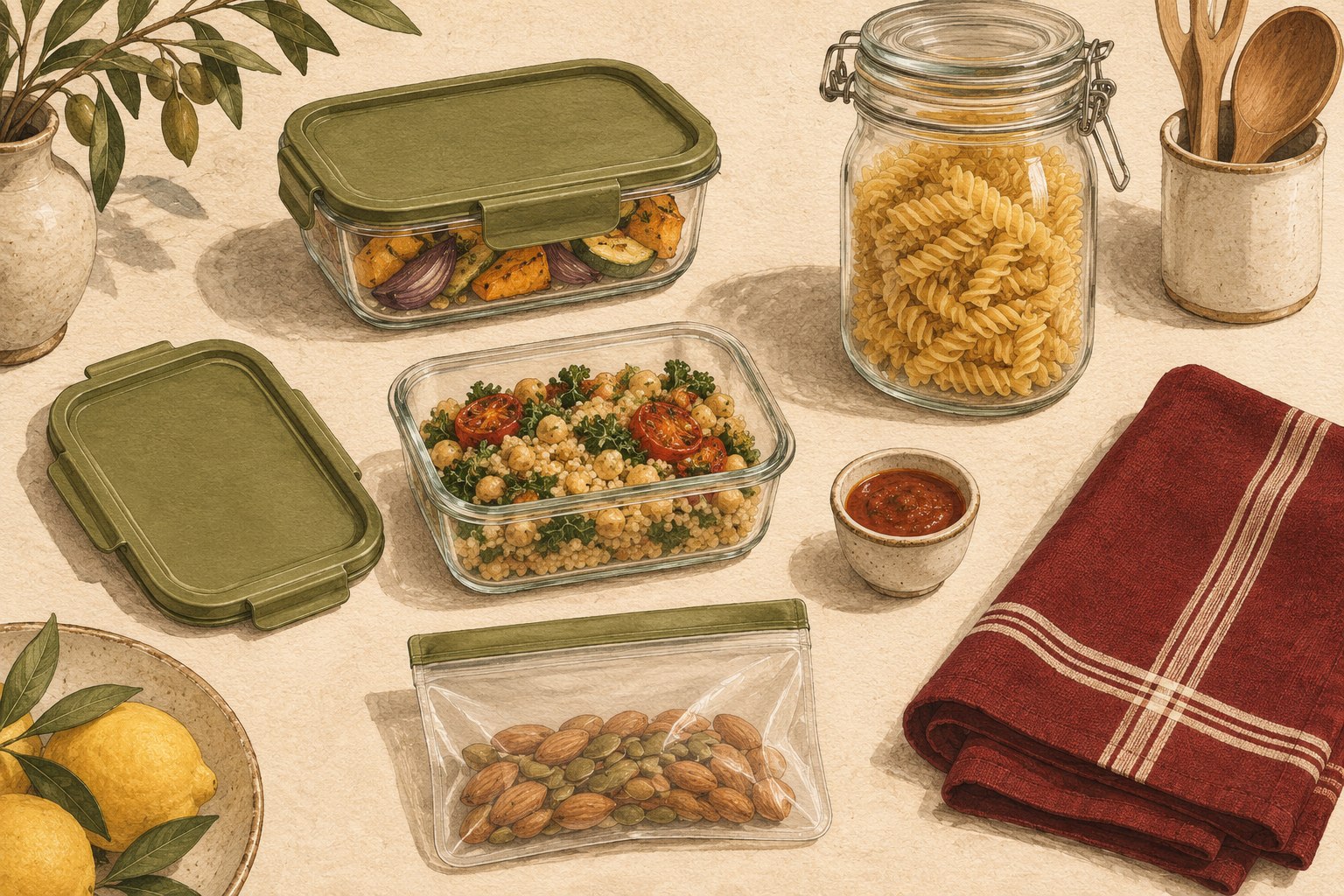
Picture the container when full and check whether your preferred grip remains comfortable. Allow space to lift it out without dragging nearby food forward. If several people share the fridge, organize portions so the oldest intended meal is easy to see and reach. Consider whether a flat lid actually supports the stacking arrangement you want; do not turn an unstable pile into a storage strategy. A flexible bag can fill some awkward spaces, but it offers a different kind of protection from a rigid box, so choose it for a clear role.
Keep food handling separate from container marketing
USDA advises dividing large amounts of leftovers into shallow containers and refrigerating them promptly. A material choice does not remove those handling steps or guarantee a particular storage life. Label portions with useful information and consult current guidance for the food involved. Clean each part according to its instructions, inspecting the lid and seal while they are accessible. Replace or seek manufacturer advice about damaged pieces rather than assuming that a new storage arrangement fixes a problem with an individual container. The best system is one you can use, understand and maintain consistently after a normal meal.
Tools to consider
A smaller rectangular format for dividing portions.
Consider before buying: Use the lid's directions as well as the container body's permissions.
A larger glass reference when the baking and serving role is useful.
Consider before buying: Its substantial footprint and glass-care limits may make separate portion boxes more practical.
A few practical questions
Is every glass food container oven safe?
No. Use only the permissions for the exact product and check its lid separately.
Put it to work
Lemony white bean skillet · Lemon-herb chicken & potatoes · Roasted carrot & ginger soup
Product information & sources
Recommendations are based on published product specifications and practical fit for the task. Check the exact model, seller, dimensions and care instructions before ordering.
Pinterest image
Keep this guide close for your next kitchen project.
