


Storage 3 min read
Divide leftovers into useful freezer portions
In this guide

A useful freezer portion should be easy to identify and appropriate for the meal you intend to make. Begin with a realistic quantity and a suitable container instead of freezing one large, anonymous batch.
Choose the meal-sized unit
Think about who will eat the food and whether it will become one complete meal or an ingredient in another recipe. Divide portions accordingly rather than using the largest container available. Leave the headroom required by the container and the food's storage instructions; a capacity label is not an instruction to fill to the rim. If you often need two different portion sizes, make that distinction obvious in your labels and shelf arrangement. A useful portion is one that can move through your normal thawing and reheating plan without unnecessary guessing.
Follow cooling guidance before freezing
USDA recommends dividing large amounts of leftovers into shallow containers and refrigerating them promptly. Its guidance says to refrigerate within two hours, or one hour when the surrounding temperature exceeds ninety degrees Fahrenheit. Do not leave a large batch out while waiting for a more convenient packing moment. Keep your container layout ready before cooking finishes, and follow current guidance for the particular food. Freezer suitability is a product property, while safe handling depends on the steps you take before the container reaches the freezer.
Compare rigid portions with flexible bags
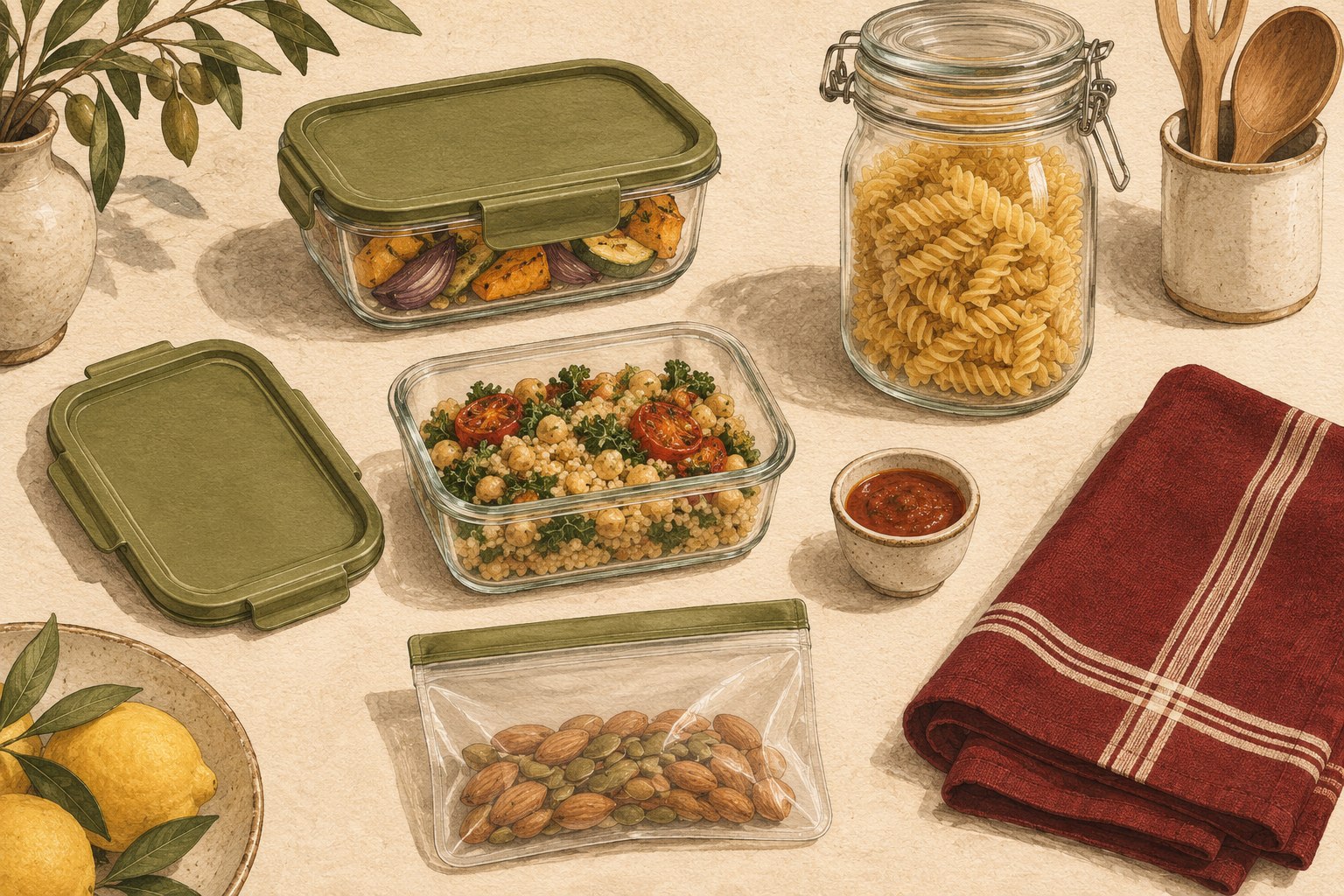
The Rubbermaid medium rectangle and Stasher sandwich bag provide different shapes for the same planning exercise. A rigid container has a defined footprint and protects its contents differently from a flexible bag. A bag may fit an available space but needs a clean seal and a supported filling position. Choose based on the food, the shelf and the way you will retrieve it. Do not assume either shape will behave as a leakproof transport vessel in every condition; follow the manufacturer's filling, closing and use directions for the exact item.
Label for the future meal
Record what the food is, when it was prepared or stored and any detail that distinguishes the portion, such as a sauce packed separately. Put the label where it can be read without removing several other containers. Keep the manufacturer's temperature and cleaning limits with the product information, and follow a suitable thawing and reheating method when using the food. USDA's leftovers guidance includes checking reheated food with a thermometer rather than judging it solely by the container's warmth. Build a freezer layout that rotates portions into view so the system supports an actual meal plan instead of simply accumulating more boxes.
Tools to consider
A documented freezer-suitable rectangular portion container.
Consider before buying: Follow the food's cooling guidance and the model's fill and lid directions.
A flexible alternative for portions that suit a bag.
Consider before buying: Clean and inspect the seal, and support the bag while filling.
A few practical questions
Does a freezer-safe container make any storage duration suitable?
No. Container compatibility does not determine the food's storage life; consult guidance for the food and handling method.
Put it to work
Lemony white bean skillet · Roasted carrot & ginger soup
Product information & sources
Recommendations are based on published product specifications and practical fit for the task. Check the exact model, seller, dimensions and care instructions before ordering.
Pinterest image
Keep this guide close for your next kitchen project.
